ondes martenot onde martenot martinot waves Paris France Strasbourg Europe Swiss Belgium ondes martenot onde martenot martinot waves Paris France Strasbourg Europe Swiss Belgium

Thomas Bloch avec les Ondes Martenot


Thomas Bloch owns and plays ondes Martenot
made for him in 1985 (last concert model - n°343)
titre Thomas Bloch

musician
performer of rare instruments

"Thomas Bloch is unquestionnably a virtuoso and a musician"
The New York Times


GLASS HARMONICA
ONDES   MARTENOT
CRISTAL     BASCHET


NEW !      WATERPHONE - THEREMIN CELLO


ONDES MARTENOT    


français


home

biography
discography
gallery
audio - video
performances
composition
press kit


glass harmonica
ondes martenot
cristal baschet
waterphone
theremin cello
musical saw
crystal voice duet


recording studio

links


contact

A brief text about facts regarding the instrument is followed by a more complete text written by Thomas Bloch for the booklet of his CD "Music for ondes Martenot" published by Naxos (ref. 8.555779) and by a repertoire of works composed for it.

It is possible to hear excerpts of this CD and to see more videos on the audio - video page of this site.


  • The ondes Martenot in brief...

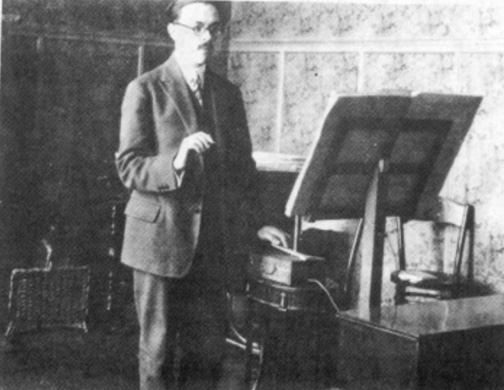
Maurice Martenot - ondes Martenot 1928

Maurice Martenot plays the 1rst model (1928)
he used only a ribbon and had to stay  a little way from the unit
     Maurice Martenot (1898 - 1980) found the principle of ondes Martenot (sometimes written onde Martenot, Martenot waves in English, fale martenota in Polish, ondas martenot in Spanish or, by mistake : ondes Martinot), when, as a serviceman in radio transmissions during the first world war, he noticed «the purity of the vibrations produced by the lamps of a condenser whose intensity can be made to vary».

     It was one of the first electric instruments in the world and the only one of that time to have given rise to a vast repertoire and to be still played today. Maurice Martenot was also a cellist and the inventor, with his sister, of a method of artistical education. He was above all interested in the musical means offered by electricity and not so much by research in sound. He started doing research work for ondes Martenot in 1919. But he did not present the instrument to the public until May 1928 at Paris Opera.

    His immediate triumph was followed by a world tour.

   Seven successive specimens made by Maurice Martenot were born, each one bringing innovations. The bases of the last instrument, transistorised, still played and taught in about ten Music Academies in France and in Canada, were fixed in 1975.

     The building of Ondes Martenot stopped in 1988. His son Jean Louis then started working on a digital instrument. In 1995, engineer Ambro Oliva makes the ondéa, a close instrument.

     REVIVAL !!!   From 2008, Jean-Loup Dierstein works on rebuilding the original ondes Martenot. It will be for sale. The production will probably begin in 2010 - write here to buy it or for informations about this new instrument.
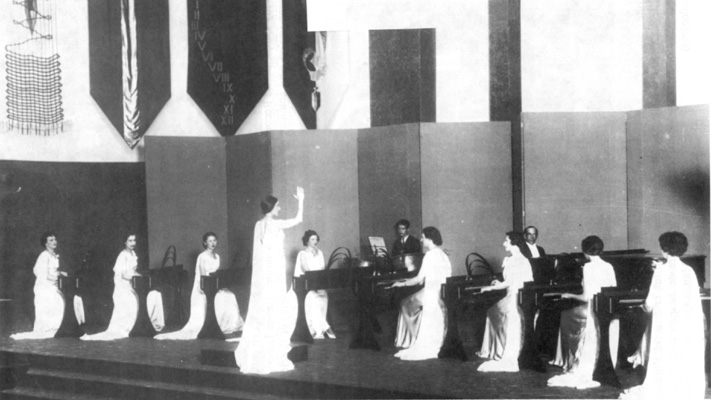
ondes Martenot ladies

Ondes Martenot octet and two pianos
conducted by Ginette Martenot (around 1935)

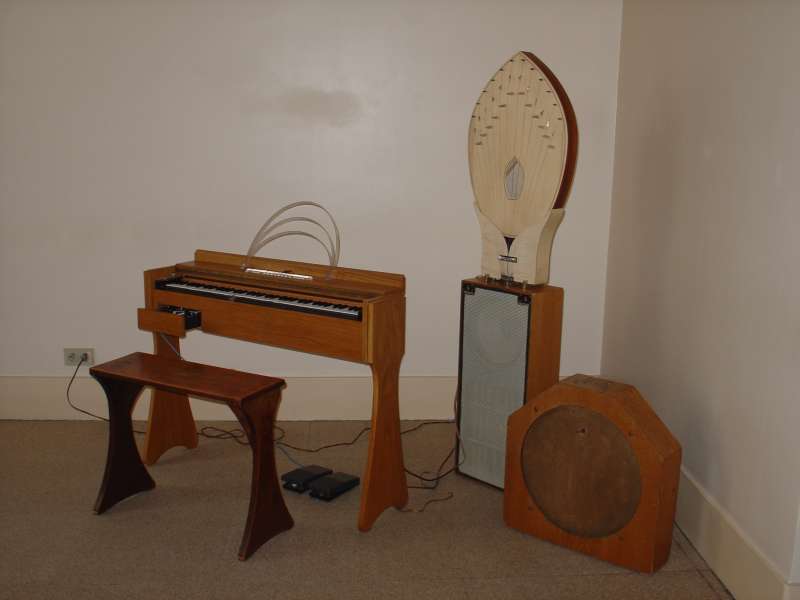
ondes Martenot

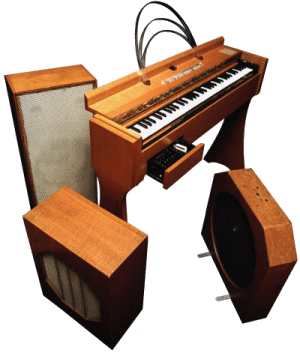
The 7th model of ondes Martenot
(1975)
with
the double pedal
and
 the loudspeakers :
"principal"
with the "résonance" included in the same cabinet
the "métallique"
the "palme"
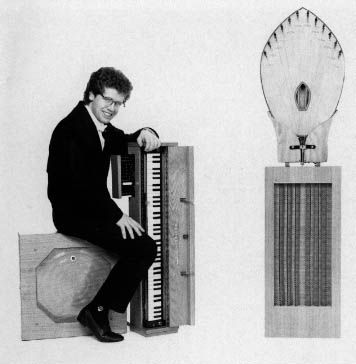
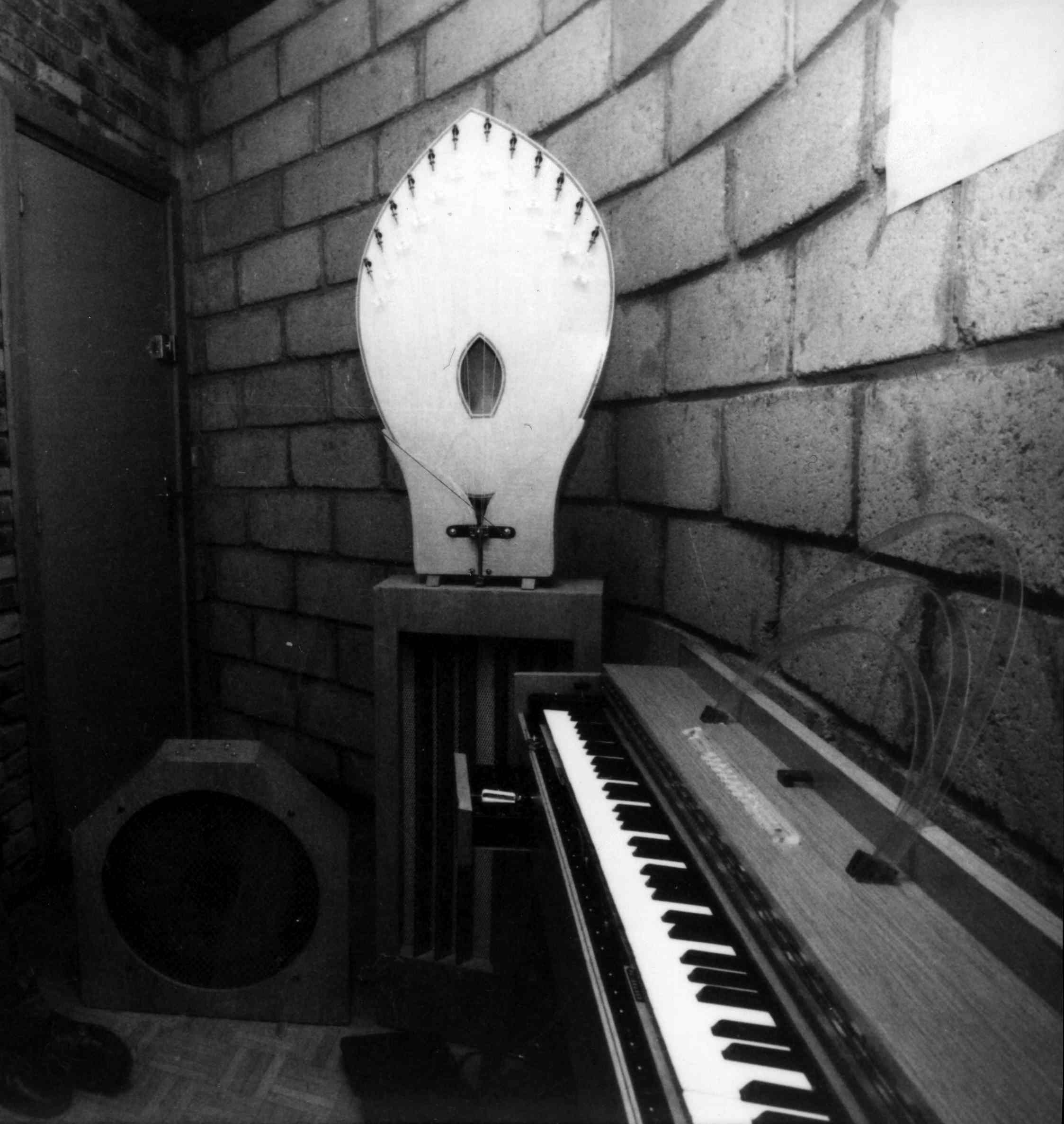
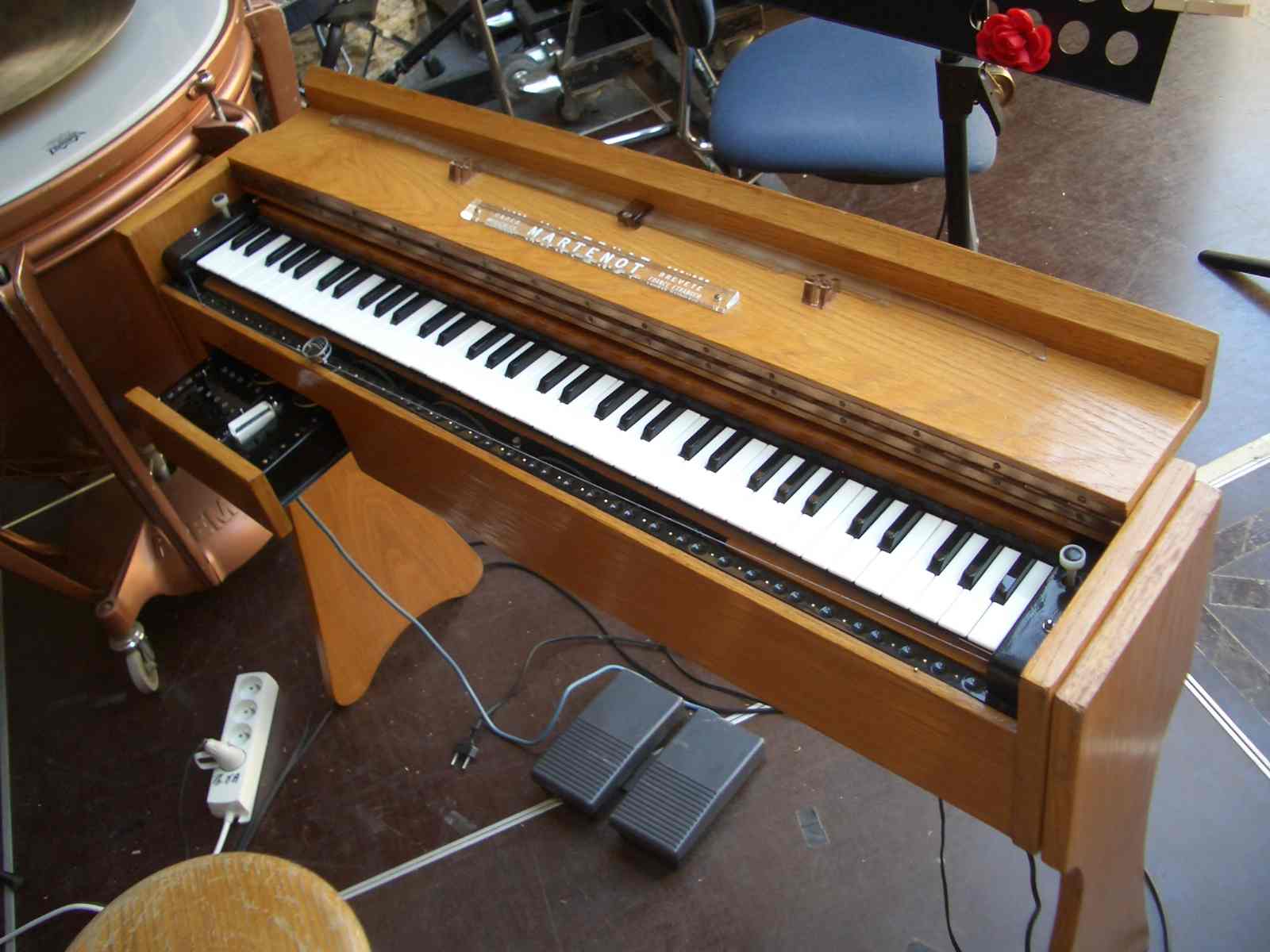
    The instrument is monophonic and consists in three diffusers : a principal diffuser (a traditional loudspeaker), a resonnance diffuser (two possibilities : one originally named palme which is a loudspeaker in the shape of a flame, whose tuned strings, placed on a resonance chamber allow the sound to go on, vibrating by sympathy; and another one, more recent, named resonnance which is composed of springs and whose effect is the same but louder) and the metallique (a gong set in vibration by an engine, the metal replacing the membrane of the loudspeaker, which creates a metal sound halo at a precise pitch).

     A mobile keyboard allows a vibrato controlled «on line» and also micro intervals.

     In front of and along the keyboard there is a ruban (ribbon) with a ring through which the interpreter puts the forefinger of his right hand. The frequency corresponds to the key facing the ring and allows to obtain the same effect as with a string instrument, without frette, or with a voice (glissandi, effects, lyric, song) on nine octaves.

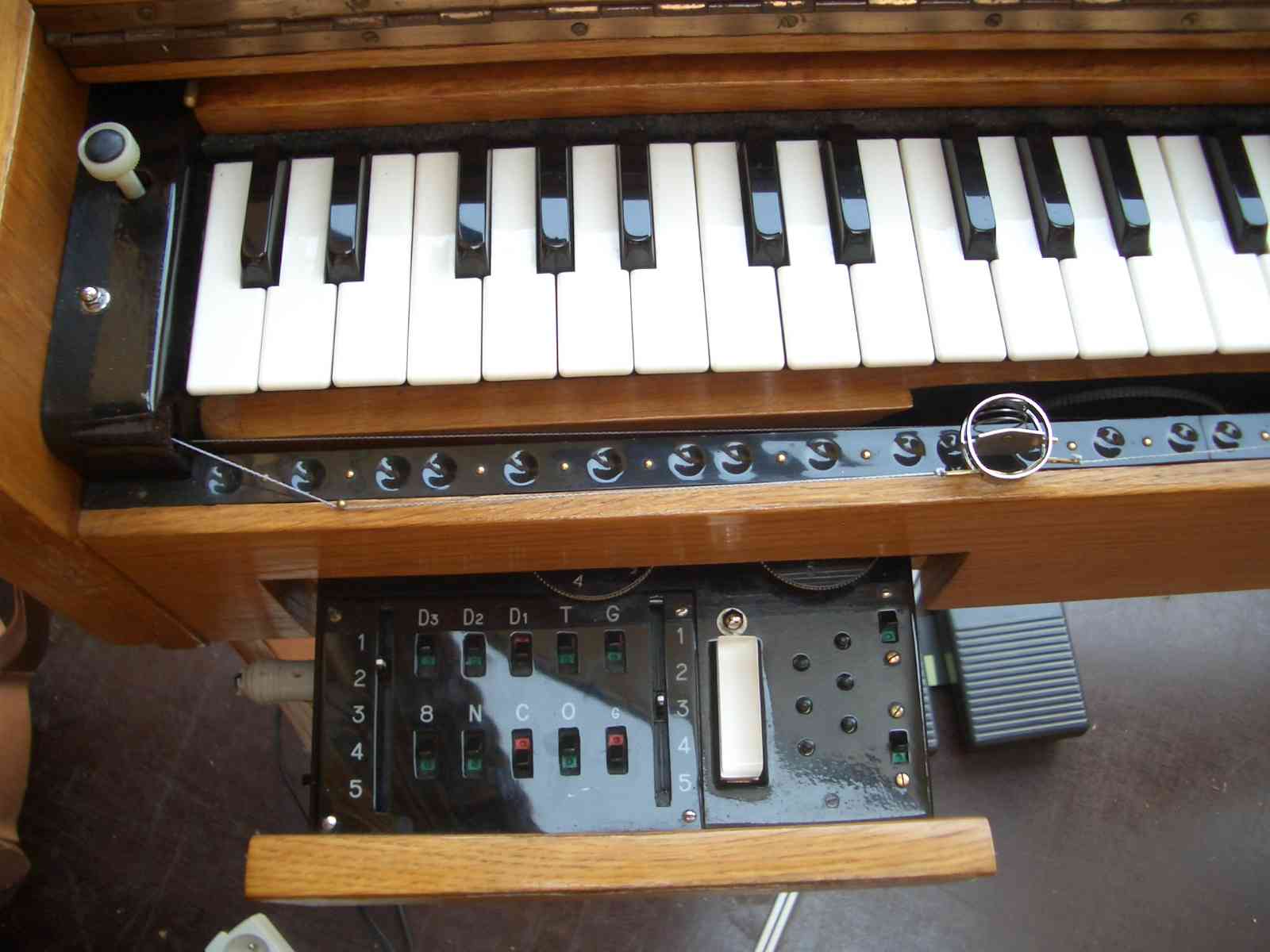
     On the left, a drawer contains all the controls : sounds (one hundred possible combinations), transposition buttons (among others : quarter tones), loudspeakers controls, balance, pink noise and «touche d’intensité» (intensity key). As with a bow, no sound is produced if the interpreter does not press that key which allows to create intensities and attacks. Two foot-controlled pedals (mute and intensity) complete the instrument.

     There is about 1500 works composed for the ondes Martenot by Varèse, Messiaen, Honegger, Scelci, Boulez, Jolivet, Murail... It is also widely used in film music (Mad Max, Mars attacks, Fantomas, la Marche de l'Empereur - the March of Penguins...) and in popular music (Brel, Radiohead, Gorillaz, Vanessa Paradis...).


  Thomas Bloch is one of the very rare professional ondist (around ten in the world).
ondes Martenot - glassharmonica - Thomas Bloch

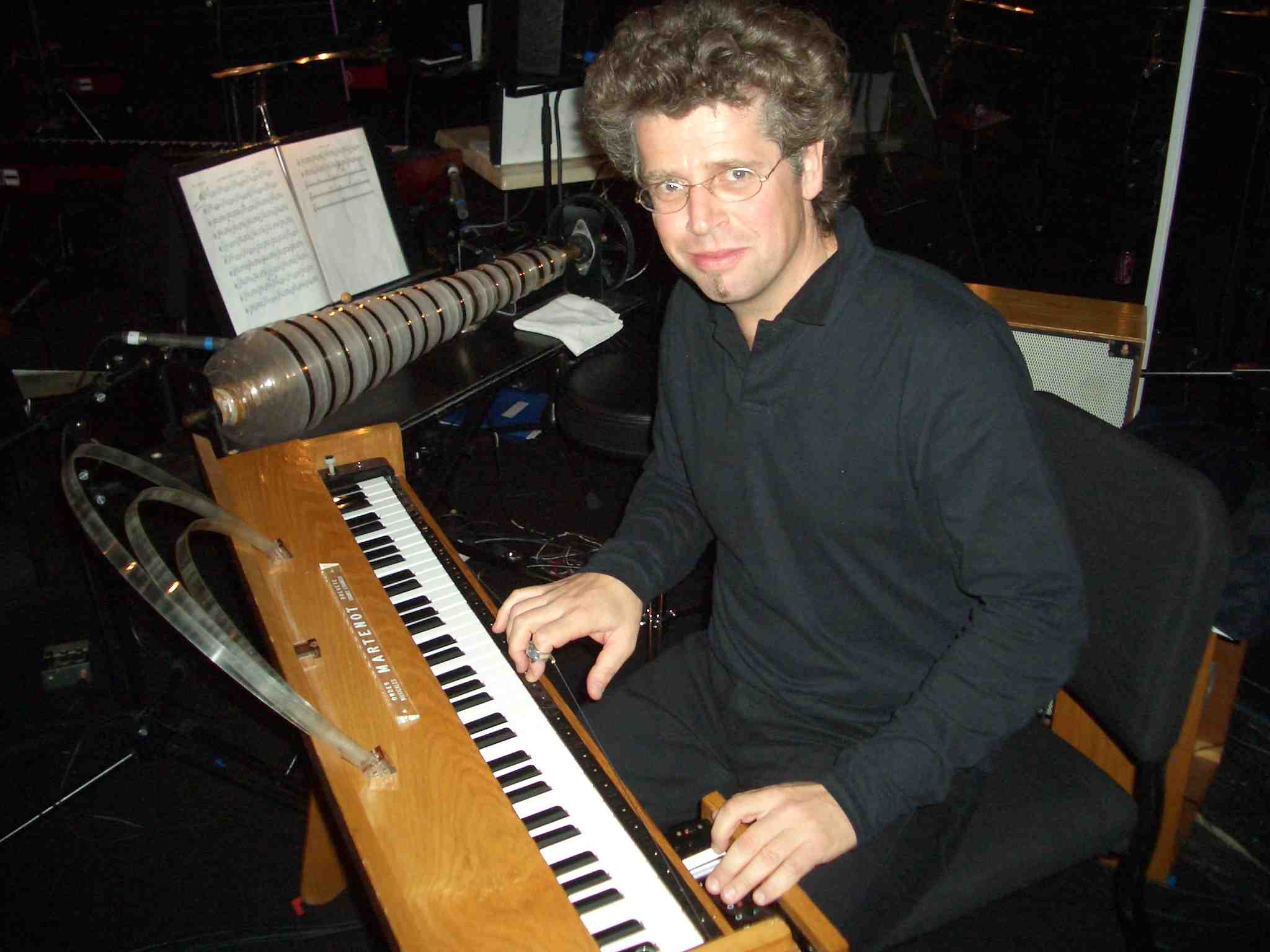
Thomas Bloch with his ondes Martenot
and his glassarmonica at the rear


Thomas Bloch plays an excerpt

of his own "Formule" for ondes Martenot
 

Thomas Bloch (ondes Martenot) and Jean-François Zygel (piano)

play the 4th "Feuillet inédit" by Olivier Messiaen


THE ONDES MARTENOT

by Thomas Bloch


© Thomas Bloch / Naxos, 2004
from the booklet of the Thomas Bloch's CD
"Music for ondes Martenot" (réf.: Naxos 8.555779)
english translation : Susannah Howe


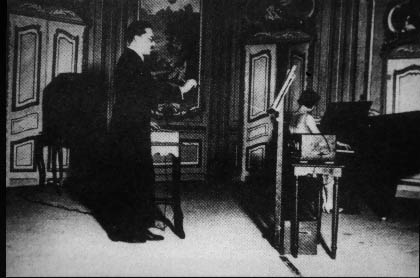
Maurice Martenot - Ginette Martenot Paris opera in 1928


Maurice Martenot
plays the first model
of ondes Martenot
with his sister Ginette (keyboard)
in Paris opera

(1928)
    The french Maurice Martenot (Paris, 1898 - Clichy, 1980) began his musical education early, giving his first cello concerts at the age of nine, accompanied by his sister Ginette who was to become the first ondes Martenot soloist. He was equally passionate about science (an area in which he was self-taught) and teaching; he wrote books on relaxation and breathing techniques, as well as, with his older sister Madeleine, developing the Martenot teaching method, widely used in France.

     In 1917 Martenot was working as an army radio operator when he came across the principle behind the instrument he went on to invent. While using valve radios tuned to similar (but not identical) frequencies, he noticed the “purity of the vibrations produced by triode valves when the intensity of the electrical charge is varied by means of a condenser [or capacitor]”. He began his musical experiments in 1919.

     At around the same time the Russian physicist Lev Theremin was perfecting his own electronic instrument. The theremin has two aerials and the performer moves his or her hands towards and away from them, without ever touching them, to change the pitch and volume of the sound produced. Greatly piqued by the appearance of the theremin in Paris in 1927, Martenot presented the second version of his instrument, which he was then calling the “ondes musicales” (musical waves) at the Opéra on 3rd May 1928. The international tour that followed was met with great critical acclaim: the Deutsche Allgemeine Zeitung said, “Theremin is a physician-musician while Martenot is a musician-physician”; “It is ethereal, supernatural, inexplicable” claimed Information, and Der Abend (Vienna) enthused, “Wonder triumphed over scepticism”, while the New York Herald said that had he lived in the Middle Ages, Martenot would have been accused of witchcraft and burned alive in the town square.

     Martenot’s primary interest, however, was not research into new sounds (unlike the inventors of synthesisers, whose first models appeared almost thirty years later). The development of this most musical of electronic instruments was driven above all by an interest in the expressive, musical potential offered by electricity.

     To understand how the ondes Martenot works, we need to look at an acoustic phenomenon. The string of an instrument playing the note A has a frequency of 440 Hz, i.e. it vibrates back and forth 440 times per second. Depending on the speed of this vibration, the note (frequency) is low or high. The radio used by Martenot only worked at a very high frequency, emitting an ultrasonic note inaudible to the human ear (80 000 Hz). To obtain an audible sound therefore, he used the principle of heterodyning (which musicians use when tuning to another instrument) - producing a beat frequency by the combination of two oscillations of slightly different frequency in order to generate a third, whose value is the mathematical difference between the first two. The note A, for example, can be produced by the simultaneous production of two inaudible frequencies of 80000 and 80440 Hz. The first frequency is fixed and never changes, while the second is variable, modified by the performer who plays the instrument either via a keyboard (clavier or CL in French) or by moving a wire know as a ribbon (ruban or R in French).
ondes Martenot BW Thomas Bloch
The keyboard and the loudspeakers

ondes Martenot - keyboard - ribbon - drawer


The keyboard
the ribbon
the drawer
and the pedals
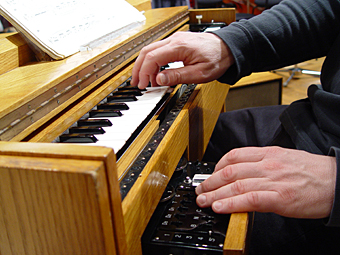
     The ondes Martenot is monophonic, so the keyboard and ribbon are played with the right hand only, with the exception of a number of virtuosic works requiring the use of both hands. With the left hand, the performer can alter aspects such as dynamics and timbre, using controls in a small drawer on the side of the instrument.

     The keyboard (written CL on a score when it is used in a work) has six visible octaves but actually has a range of almost nine, via a switch and transpose buttons. It is also sprung and the keys can be moved laterally through microtones a semi-tone up or down, thereby enabling the performer, by moving the right hand from side to side while depressing the keys, to create a vibrato effect just as Martenot could when playing the cello.

     The ribbon
(written R on a score when it is used in a work) extends along the length and in front of the keyboard and has a metal ring which fits on to the ondiste’s right index finger. He or she then plays different notes by sliding the ring along  the keyboard, and above a scale calibrated with bumps and indentations which act as visual and tactile reference points. The sound made is like that of a fretless string instrument or the human voice, producing glissandi that can be unbroken or sketched out across the instrument’s range, special effects, lyrical intonation, microtones, vibrato, and so on. Here again there is an obvious analogy with the cello. In addition, a key element of Martenot’s teaching method was the importance of gesture and movement and the ondiste’s ribbon technique puts this into practice. Some composers add scroll-like designs to their scores which players then reproduce with their hand movements, translating the image into sound.

     The musician’s left hand works the touche d’intensité (intensity key) located in a little drawer on the left side of the instrument. This controls the sound level, something like the volume control of a radio. Extremely sensitive, it has a two-centimetre range of movement and can take the volume from zero to earsplitting. It acts as an extension of the player’s thought process, enabling a wide variety of nuance, phrasing and attack (accents, slurring, detached notes, staccato, percussive effects, and so on). In order to produce a sound the musician has to play the keyboard (or ribbon) and depress the button simultaneously. The action of the latter is similar to that of a bow, recalling once more Martenot’s beloved cello.

     Also located in the drawer are seven switches that control the choice of wave form (sounds) and their mixing, enabling numerous timbre combinations. On the latest model (1975), they are designated by letters rather than by numbers as on previous models: O for Ondes (sinusoid waves), C for Creux (peaklimited triangular signal), g for petit gambé (a square signal whose intensity can be regulated using a selector), G for Gambé (square signal), N for Nasillard (pulse signal), 8 for Octaviant (reinforced first harmonic, whose intensity can be regulated using a selector) and T for Tutti (combination of all timbres). There are also two switches which can be used to obtain variable-intensity pink noise, comparable to a Puff (S for Souffle), and to filter the harmonics (F for Feutre), creating a mute effect.


Playing on the keyboard (right hand)
while the left hand
controls the intensity key

drawer ondes Martenot

The keyboard, the ribbon with the ring
and the drawer with 
the intensity key (in white),
the sounds, the white noise, the loudspeakers and
the transposition buttons and the mixing knobs
     The drawer also contains six transpose buttons which allow the player to change each individual note instantaneously and simultaneously: a quarter-tone higher or lower, or a semi-tone, tone, third or fifth higher.

     Two foot pedals are connected to the drawer to work as a filter and touche d’intensité (intensity key) when a score requires both hands on the keyboard.


     Finally, the player uses a selection of switches to choose one or more of the four separate loudspeakers (diffuseurs in French: D1 to D4) which produce specific sound effects that can be combined using a mixing knob.

     The main loudspeaker (Diffuseur Principal - D1) is a traditional loudspeaker invented with the instrument. The Résonance (D2) dates from 1980 and is made up of stretched coiled strings enabling sounds to be prolonged. It is based on the Palme (D4), developed in 1950; both are used in the same way, but the latter has two sets of twelve chromatically tuned metal strings, stretched over a flame-shaped case, which resonate in sympathy with the notes played by the performer. Lastly, the Métallique (D3), invented around 1930, has a metallic plate like a gong that acts as the speaker membrane and produces an acoustic halo effect when the instrument is played.

     Over the decades since its invention, there have been seven models of the ondes Martenot, all incorporating various improvements.

     The 1919 instrument, a kind of theremin, was not seen as viable by Martenot and his first “official” model was that of 1928. This only had the ribbon, which the player pulled and released with the right hand to slide from one note to another. The performer stood a little way from the unit and controlled the volume using a control in a drawer on a table. The second model (1929) was more compact and included a dummy keyboard with a pointer to indicate the pitch of the notes played on the ribbon. The third model (1930) could be played from either a seated or standing position and the ribbon was positioned above a dummy wooden keyboard which worked as a visual reference. The next model had no ribbon but had a working, sprung keyboard. Ribbon and functioning keyboard finally appeared together in version five in 1937, the year in which Messiaen composed his Fête des Belles Eaux for six ondes Martenot (which was performed on a boat floating down the Seine as part of Exposition Universelle). Martenot began giving classes in the instrument at the Paris Conservatoire National Supérieur de Musique in 1947, and a dozen or so more courses were later established in France and Canada, encouraging official recognition of the instrument. Model six (1955) was smaller and lighter owing to progress made in the field of electronics. The seventh and final version (1975) replaced valves with transistors.

     Around 370 instruments were manufactured in Martenot’s workshop in Neuilly-sur-Seine, near Paris, along with a number of non-professional models: simplified versions for school use, chamber music versions, one combined with a radio and turntable and one designed to play raga modes (built in 1932 for the Indian poet and musician Rabindranath Tagore), among others.


     Production ended in 1988 on the retirement of Marcel Manière, Martenot’s assistant since 1951. Jean-Louis Martenot, one of Maurice’s sons, worked on a digital version, but this was not pursued. In 1995, engineer Ambro Oliva makes the ondéa, a close instrument.

    REVIVAL !!!  After 2008, Jean-Loup Dierstein, a wordly french renowned specialist of vintage keyboards, works on rebuilding the original ondes Martenotwith the support of Maurice Martenot's son. It will be for sale. The production will probably begin in 2010. The instrument is exactly the same than the very last ondes Martenot model made in 1988 - write here to buy it or for informations about this new instrument.
Ribbon play (right hand) - ondes Martenot
Playing with the ribbon

ondes Martenot
The keyboard and from left to right the "diffuseurs"
"principal" (D1), "résonance" (D2), "métallique" (D3)

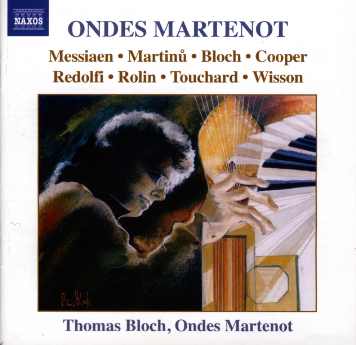
ondes Martenot CD cover Thomas Bloch Bloch Naxos - painting by Rémi Bloch


"Music for ondes Martenot"

Thomas Bloch's CD cover
Naxos - reference : 8.555779
- painting by Rémi Bloch -
     Today the ondes Martenot repertoire comprises more than a thousand works, in varying genres: contemporary music, pop songs, film scores, stage music, dance, rock and pieces written for radio, TV and ads. Composers of works for the instrument include Dimitri Levidis (whose Poème symphonique of 1928 was the first work written for the instrument), Pierre Boulez (ondist himself), Elmer Bernstein, Sylvano Bussotti, Jacques Canteloube, Jacques Chailley, Jacques Charpentier, Marius Constant, Henri Dutilleux, Nguyen Tien Dao, Arthur Honegger, Jacques Ibert, Maurice Jarre, André Jolivet, Charles Koechlin, Marcel Landowski, Olivier Messiaen, Darius Milhaud, Tristan Murail, Nicolas Obouhow, Bernard Parmegiani, François Rauber (the writer of Jacques Brel’s songs), Maurice Ravel (who authorised arrangements of a few of his works - Ma Mère l’Oye, the String Quartet and Sonatine for piano - saying they sounded as they did in his dreams), Henri Sauguet, Giacinto Scelsi, Yoshihisa Taira, Henri Tomasi, Edgar Varèse, Pierre Vellones... Also in pop music field : Jonny Greenwood (Radiohead), Damon Albarn (Gorillaz), Tom Waits...

     Although the ondes Martenot is a multifaceted instrument, it is sometimes considered obsolete by those ignorant of its potential. Composer Michel Redolfi quashes all such prejudice: “The ondes Martenot, whose most celebrated patron was of course Olivier Messiaen, continues to be used in weird and wonderful compositions. Seen as taboo, rejected by those who fail to understand its qualities, thought of as too pure, out of control, too free in its apparently effortless sound production, without exaggerated physical movement, the ondes Martenot can, for instance, create new chords for the human voice, free it from its player’s flesh and breath and let it drift away towards new soundworlds.


Thomas Bloch (ondes Martenot, glass harmonica, cristal Baschet),

Damon Albarn (Blur, Gorillaz) and David Coulter
during "Monkey: journey to the West" preparation
(BBC - Endemol / England)


  • Repertoire   (excerpt)

1200 works were composed for ondes Martenot in very different fields :
ballet, songs, films, theater-plays, jazz, rock, contemporary music, radio jingles, television, advertisements...

  .
Georges AURIC : La P. respectueuse  ondes and orchestra...
Pierre BOULEZ : Les poemes de Char  ondes, voice and piano
Sylvano BUSSOTTI : Due voci  ondes, soprano and orchestra - Pieces de chair  barytone, ondes and instrumental ensemble...
Roger CALMEL : Stabat Mater  ondes and orchestra...
Jacques CHAILLEY : Casa Dei  ondes, voice, choir and orchestra  - Les Perses d'Eschyle  ondes, choir, percussions and orchestra...
Jacques CHARPENTIER : Concerto  ondes and orchestra - Concertino alla francese  ondes, strings orchestra and percussions - Suite Karnatique ondes solo - Rasikapria  ondes quartet - Lalita  onde and percussions - Lied  ondes solo...
Henri DUTILLEUX : Trois tableaux symphoniques  orchestra with ondes - La fille du diable (suite)  orchestra with ondes
Arthur HONEGGER : Jeanne au Bucher  ondes, orchestra, choir, soloists - Concerto en Ut  ondes and orchestra - Le Soulier de Satin (10 hours long theater play)  ondes, voice and orchestra - L'idée (movie)  ondes and ensemble...
Andre JOLIVET : Concerto  ondes and orchestra - Suite delphique  ondes and ensemble...
Charles KOECHLIN : Second symphony opus 196  orchestra with ondes - Le buisson ardent  orchestra with ondes...
Marcel LANDOWSKI : Concerto  ondes and orchestraLe Fou (opera) - Montségur (opera) - Messe de l'Aurore  singers, orchestra with ondes - La vieille maison  ...
Bohuslav MARTINU : Fantaisie   ondes, piano, oboe, strings quartet
Olivier MESSIAEN : Trois Petites Liturgies de la Presence divine  onde Martenot, piano, women or children choir, small ensemble - Turangalila Symphonie  ondes, piano and orchestra - Saint Francois d'Assise (opera)   3 ondes, orchestra, choir, soloists - Fete des Belles Eaux  6 ondes Martenot - Feuillets Inedits  ondes and piano
Darius MILHAUD : Suite  ondes and piano or ondes and orchestra - L'annonce faite a Marie 2 ondes and instrumental ensemble - Hamlet  orchestra with ondes
Maurice RAVEL : Piece en forme de Habanera  onde and piano - Quatuor à cordes  4 ondes - Sonatine  ondes and piano (authorized versions by Ravel)
Henri SAUGUET : Symphonie n°4  orchestra with ondes - Oratorio de Noel
Giacinto SCELCI : Uaxuctum  singers, choir, ensemble with onde Martenot
Henri TOMASI : L'Atlantide opera-ballet
Edgard VARESE : Ecuatorial  2 ondes, choir, instrumental ensemble - Nocturnal  ondes, choir and ensemble
Bernard WISSON : Kyriades  ondes, piano, strings orchestra and percussions  (or tape) concerto jazz - Mais si Robert  ondes and tape...

    And works by Damon ALBARN, Claude ARRIEU, Tony AUBIN, Claude BALLIF, BARRAUD, Elmer BERNSTEIN, Thomas BLOCH, Vincent-Marie BOUVOT, Régis CAMPO, Joseph CANTELOUBE, Charles CHAYNES, Jeffrey CHING, Jean-Rene COMBES, Marius CONSTANT, Lindsay COOPER, Nguyen Tien DAO, Georges DELERUE, Hugues DUFOURT, John Clyde FERROW, Jean-Claude ELOY, Jose EVANGELISTA, Michele FOISON, Jonny GREENWOOD, Jon HANDELSMAN, Joachim HESPOS, Jean HETU, Jacques IBERT, Maurice JARRE, Francis LAI, Jean LANGLAIS, Paul LE FLEM, Daniel LESUR, Dimitri LEVIDIS, Michael LEVINAS, Christophe LOOTEN, Jean MARTINON, Jan Erik MIKALSEN, Tristan MURAIL, Nicolas OBOUHOW, Bernard PARMEGIANI, François RAUBER, Michel REDOLFI, Guy REIBEL, Jean-Claude RISSET, Jean RIVIER, Etienne ROLIN, Florent SCHMITT, SAINT-PREUX, Yoshihira TAIRA, Akira TAMBA, Olivier TOUCHARD, Antoine TISNE, Pierre VELLONES, Claude VIVIER, Tom WAITS, Yvan WYSCHNEGRADSKY...


Thomas Bloch plays his "Formule" in the Barbican Center (London)


ondes Martenot Hoffnung

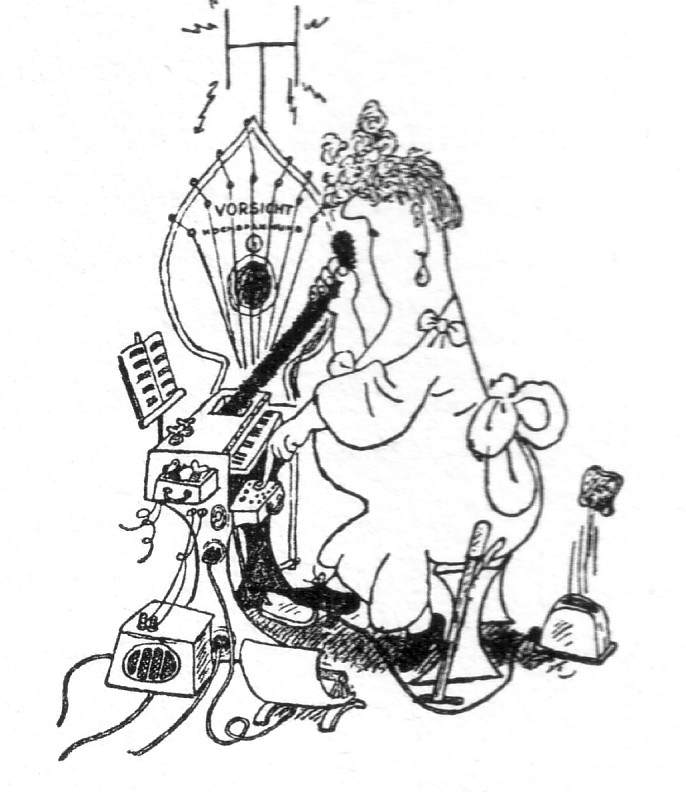
The ondes Martenot as seen by Hoffnung...


contact